

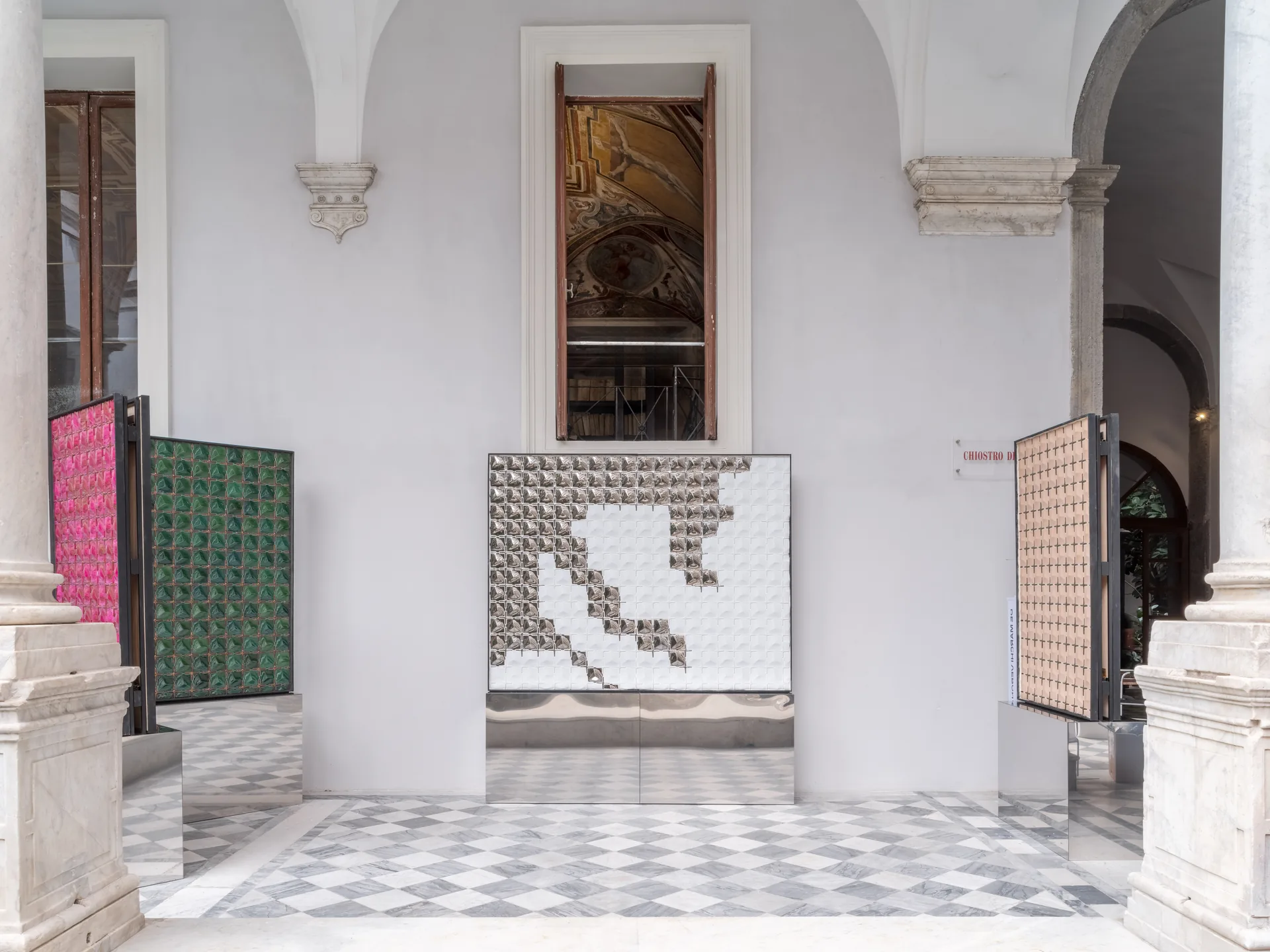
Architectural porcelain surfaces: when material becomes design
De Marchi Verona · 2026
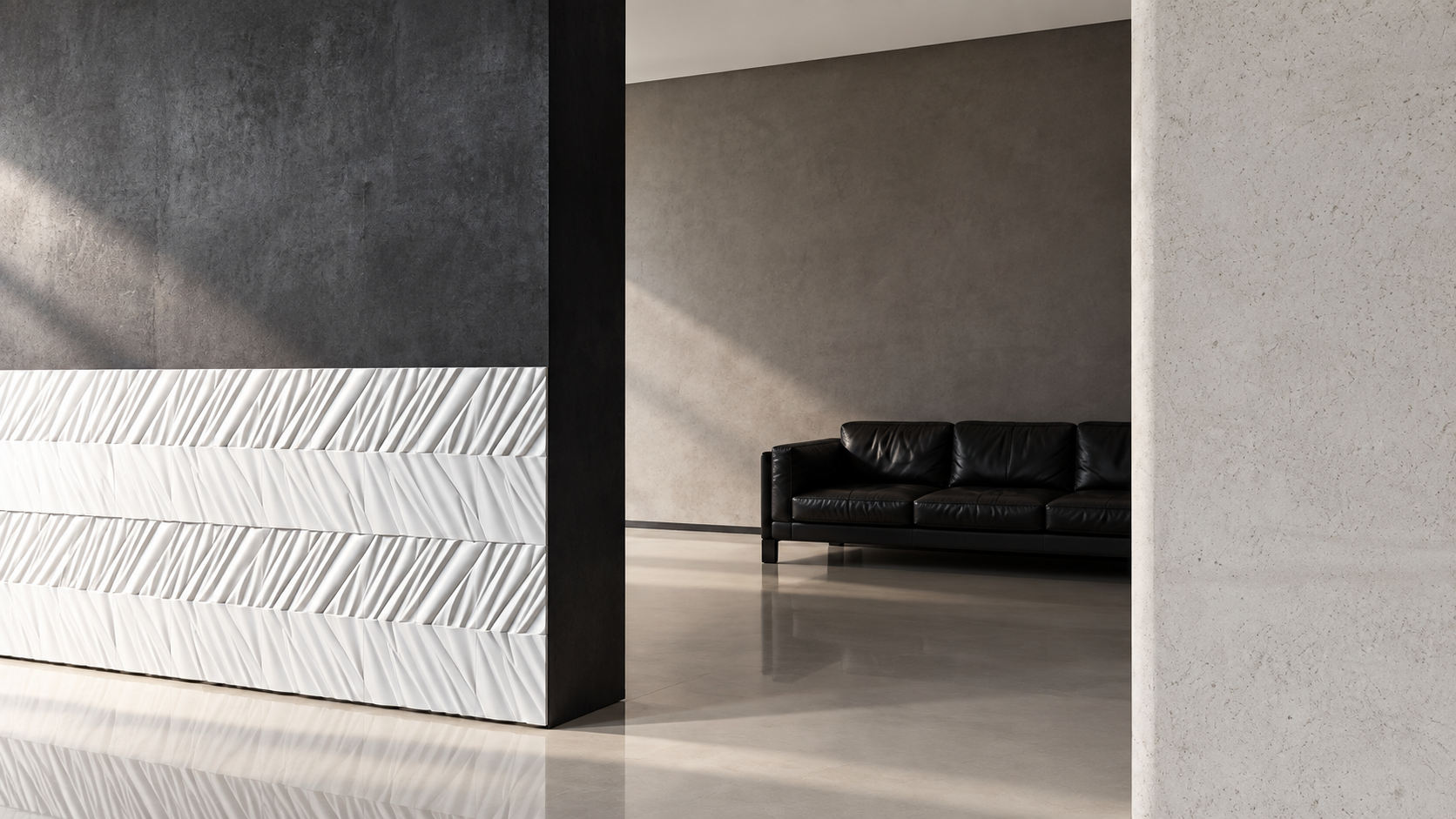
A guide for architects, interior designers and design professionals on how to use architectural porcelain surfaces to give spaces identity, depth and character. In architecture, a surface is never neutral.
A guide for architects, interior designers and design professionals on how to use architectural porcelain surfaces to give spaces identity, depth and character.
In architecture, a surface is never neutral.
It can visually expand a space, make it feel more intimate, brighter, more tactile or more dramatic. It can complement the function of a space or become the focal point of the entire project.
Talking about architectural surfaces therefore means moving beyond the traditional concept of wall covering. The wall is no longer a finish selected at the end of the process, but an element to be integrated from the earliest stages of the design.
Handcrafted three-dimensional porcelain makes this transition possible: from a simple decorative element to a true architectural material.
The wall as an active element of space
A wall can take on many different roles.
It can become a subtle backdrop that creates balance, or a striking presence that draws the eye. It can guide movement, define a sequence or give rhythm to a corridor, lobby, bathroom or living space.
Architectural surfaces operate on all these levels. They do not simply introduce colour or texture, but actively transform the perception of space.
The depth of the relief, the design of the modules, the brilliance of the glaze and the direction of the light create a composition that changes according to the viewing angle. The wall thus gains dynamism and becomes an integral part of the architecture.
Why choose architectural porcelain surfaces
Porcelain offers a particularly valuable quality for the world of design: it combines strong aesthetic appeal with technical performance suited to a wide range of contexts.
It is a compact, durable and luminous material. The glazed surface enhances depth and colour intensity, while the handcrafted process highlights details, nuances and material variations that help make every composition distinctive.
In De Marchi Verona collections, porcelain is interpreted through a contemporary architectural approach featuring:
- three-dimensional modules;
- refined finishes;
- designer collections;
- configurations adaptable to different design contexts.
This combination makes porcelain wall coverings particularly suitable for high-end residential projects, hospitality environments, retail spaces and outdoor settings.
Porcelain wall coverings for residential, hospitality and retail spaces
High-end residential
In residential interiors, porcelain surfaces can define living room walls, fireplaces, bathrooms, private spas, entrance areas and circulation spaces.
In these environments, the wall covering should stand out without becoming excessive. It should interact with furnishings, artworks, flooring, surrounding materials and natural light.
Three-dimensional porcelain makes it possible to create elegant and distinctive surfaces that enhance the architecture without overwhelming it.
Hospitality
In hospitality projects, surfaces take on an even more strategic role.
Lobbies, reception areas, corridors and suites must be consistent with the identity of the property while offering a memorable visual experience. A three-dimensional porcelain wall can become a distinctive feature, making the space immediately recognisable without relying on temporary decorative solutions.
The material therefore contributes to shaping the atmosphere and reinforcing the narrative of the place.
Retail
In retail environments, the surface can become a genuine storytelling device.
A textured wall can identify a product area, frame a counter, guide visitors through the space or create a backdrop consistent with the brand’s visual identity.
The wall covering is not simply an aesthetic choice: it becomes a tool for organising the space, directing attention and enhancing the shopping experience.
The relationship between material and light
An architectural surface should never be selected on the basis of colour alone. Light is an integral part of the final result.
A glossy finish enhances depth and multiplies reflections. A metallic finish creates more intense and dynamic variations. A geometric relief produces sharp, rhythmic shadows, while an organic design creates a softer and more natural perception.
For this reason, when selecting a collection, it is important to evaluate samples under different lighting conditions:
- natural light;
- grazing light;
- warm lighting;
- technical lighting;
- direct and indirect light.
The same module can change significantly depending on the light source, its angle and the viewing distance.
Three-dimensional porcelain fully expresses its potential when material and lighting are designed together.
A handcrafted material for bespoke projects
Handcrafting takes on particular value in projects where uniqueness and recognisability are central elements.
Each element retains traces of the material, glaze, firing and craftsmanship. These variations are not random imperfections, but the result of a controlled artisanal process capable of creating greater visual richness.
For architects and interior designers, this characteristic represents a tangible opportunity: to design surfaces with their own identity, avoiding impersonal, standardised or widely used solutions.
The wall thus becomes a bespoke composition, conceived in relation to the proportions, light and overall language of the space.
From aesthetic selection to technical evaluation
Every project has specific requirements and calls for careful evaluation.
An internal decorative wall will have different characteristics from a façade. A fireplace surround will require different assessments from those needed for a swimming pool, spa or outdoor environment.
To identify the most suitable solution, it is therefore important to consider from the outset:
- the type of substrate;
- the installation system;
- the intended use;
- the environmental conditions;
- maintenance requirements;
- the final colour rendering;
- the relationship with lighting.
The most effective choice comes from the dialogue between the design concept, the material sample and technical consultation.
Porcelain, light and identity for contemporary architecture
Architectural porcelain surfaces allow walls to take on a deeper role: no longer simply a finish, but a synthesis of material, light, relief and identity.
In high-end residential, hospitality, retail and outdoor projects, handcrafted porcelain offers an elegant and contemporary solution capable of combining aesthetic research, artisanal value and design requirements.
Tell us about your project. The De Marchi Verona team will help you identify the surface, finish and configuration best suited to your space.