

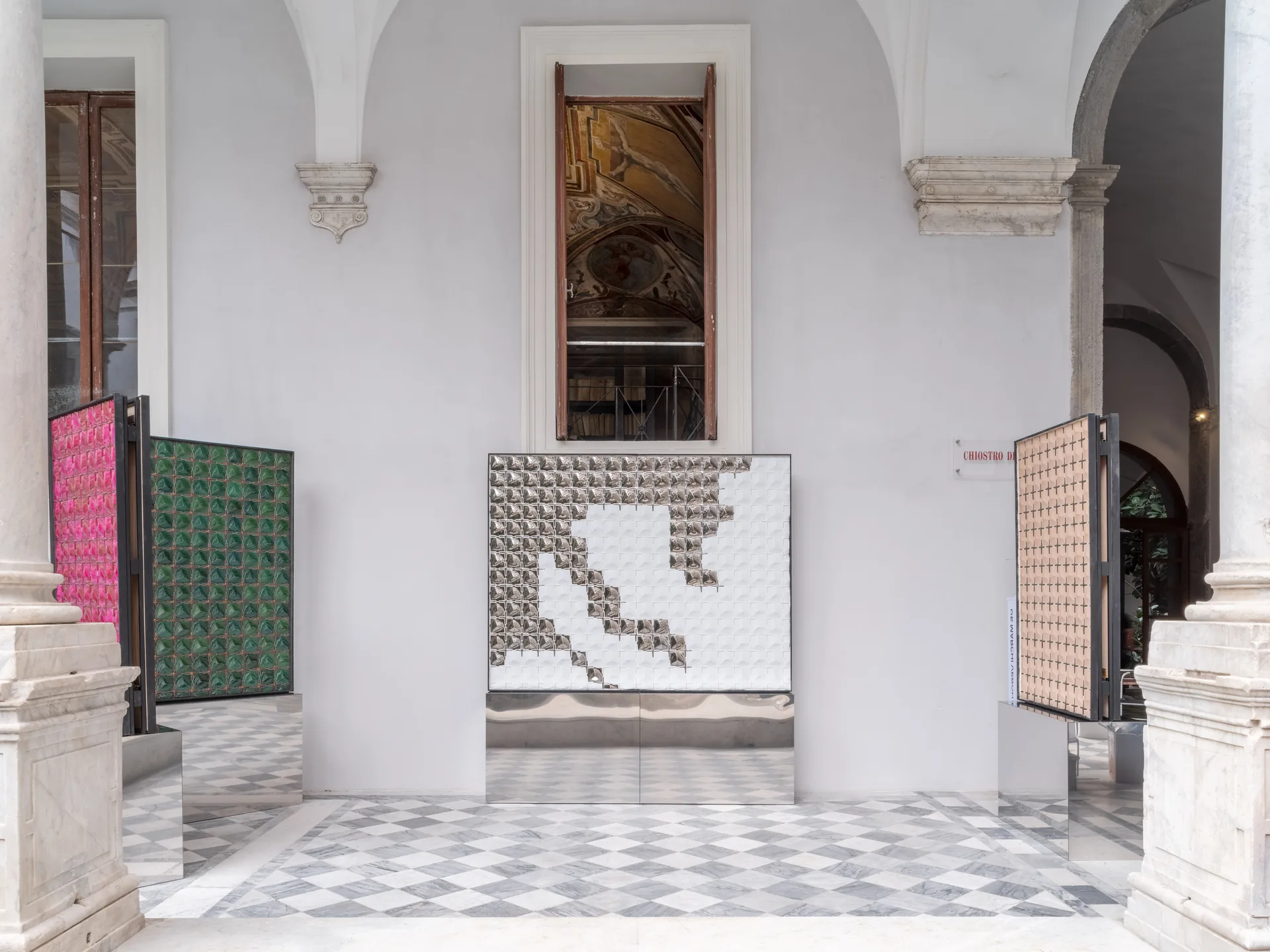
Material, light and depth can change the way we perceive a wall. And with it, the entire space.
Some walls fade into the background. Others are given a distinct role within the architectural design.
They can welcome visitors, frame a fireplace, define an area within a living room, form the backdrop to a reception desk or give a boutique its identity.
The difference does not necessarily lie in a bolder colour or a more striking pattern. More often, it comes from the material, the proportions and, above all, the way the surface interacts with light.
When these elements are considered together, the wall no longer feels like something added to the architecture. It becomes part of it.
Designing a wall, rather than simply covering it
A wall with character works when it maintains a relationship with its surroundings. The scale of the room, the distance from which the wall will be viewed, the furnishings, neighbouring materials and, of course, the light all matter.
In some projects, it can become the focal point. In others, it is more compelling when it complements the architecture with restraint, allowing relief, shadows and reflections to reveal it gradually. It is this balance that makes a wall distinctive without necessarily making it dominant.
Why work with Porcelain?
Porcelain makes it possible to approach a wall as a truly architectural surface.
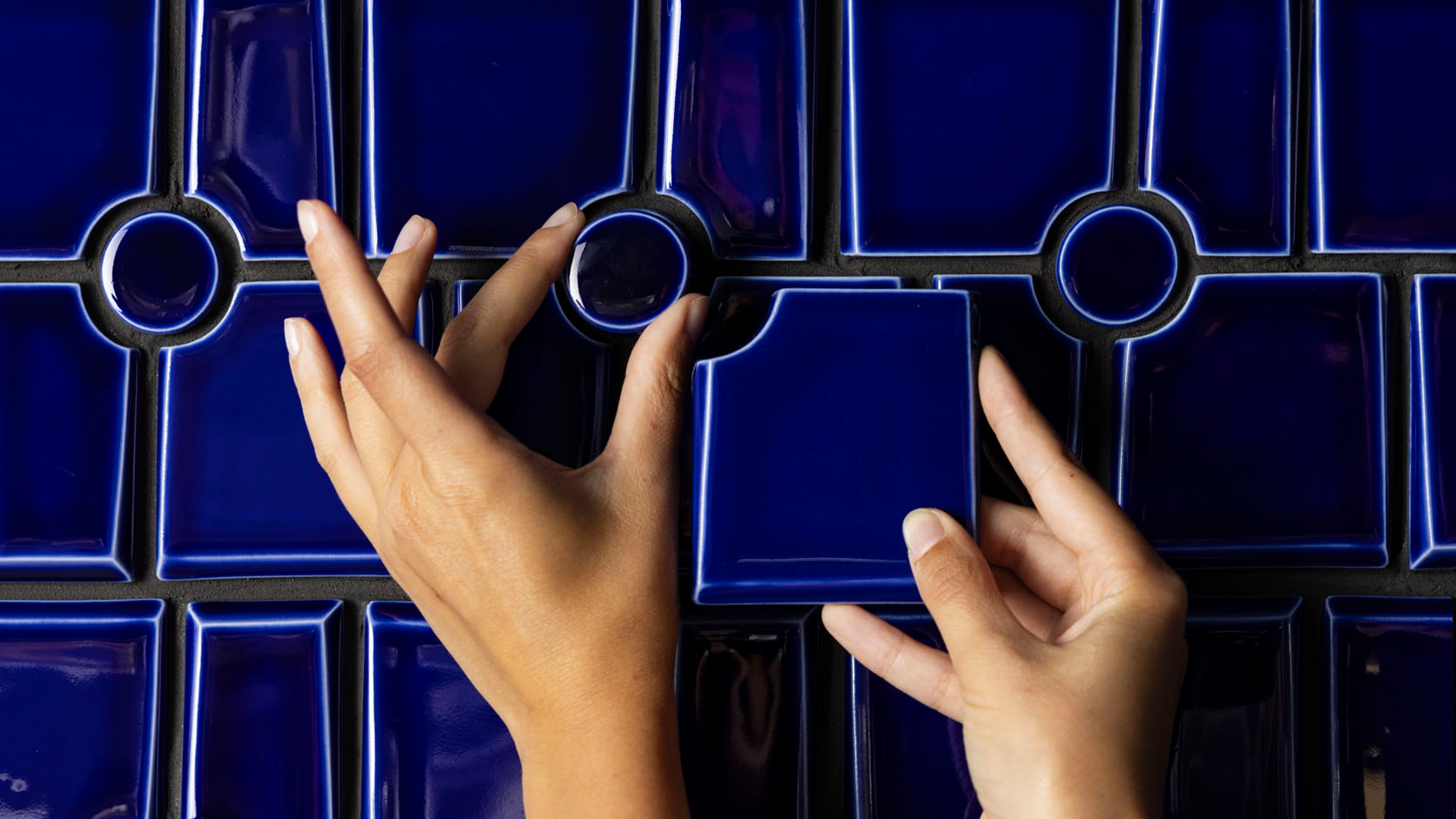
Reliefs, geometries, glazes and subtle variations in colour create a depth that is more than visual. The surface has real volume and responds differently to light throughout the day.
In De Marchi Verona collections, porcelain is handcrafted in Italy. The artisanal process gives rise to subtle variations in colour, reflection and texture, avoiding a perfectly uniform appearance. These are not qualities to conceal: they are part of the character of the surface.
This is precisely where porcelain differs from a purely graphic treatment. Paint and wallpaper primarily affect the image of a wall. Relief also influences its volume, the shadows it casts and the perception of the surrounding space.
Light as a design material
On a relief surface, light does more than illuminate. Frontal lighting tends to soften the three-dimensional effect. Side lighting or grazing light, by contrast, brings out contours, variations and depth, creating a more pronounced interplay of light and shadow.
The same surface can therefore change considerably over the course of a day.
In natural light, it may appear softer; in the evening, carefully directed lighting can make the geometry more legible and emphasise its depth. This is why the surface and its lighting should be considered together from the earliest stages of a project.
In the living room
In a residential interior, a textured wall can define an area without the need for additional elements. It can frame a fireplace, provide a backdrop to the living room, mark a transition or draw attention to an architectural volume.
Pairing it with more understated materials — wood, stone, metal, textiles or neutral surfaces — often allows the relief to emerge more naturally. The finish also changes the result significantly. A luminous surface multiplies reflections and variations, while a deeper tone or metallic finish creates a stronger presence.
In hospitality
Lobbies and reception areas are among the first spaces through which guests experience a hotel’s identity. Here, an architectural surface can become a distinctive feature without necessarily turning into decoration.
It can form the backdrop to a reception desk, complement a lounge or become part of a suite, spa or restaurant. One of the strengths of three-dimensionality is that it is never entirely static: the surface changes with the viewer’s position and with the light moving through the space. This is particularly valuable in interiors designed to be experienced from different viewpoints.
In retail
In a boutique or showroom, the wall plays a direct role in shaping the identity of the space.
It can frame a collection, enhance a counter, distinguish one area from another or create a memorable backdrop. In this context, materiality creates presence without the need for additional decorative elements. The surface itself becomes part of the story.
Geometry, relief and scale
Not all reliefs behave in the same way. Regular geometries introduce rhythm and order. Softer or more irregular forms allow the pattern to emerge primarily through the movement of light.
Depth, too, must be considered in relation to scale. On a large wall viewed from a distance, a more pronounced relief can remain clearly legible. In a more intimate space, a subtler relief may offer a better sense of balance. The choice should therefore begin with the space, not the product.
Experience the material in context before choosing
When working with a tactile surface, a physical sample is particularly important. A photograph may convey geometry and colour effectively, but it can rarely capture the full depth, reflections and response to light.
Seeing the material in person makes it possible to understand how it changes as you move in front of it, how it interacts with other project materials and how it performs under the actual lighting conditions.
Before making a decision, it is therefore worth considering the scale of the wall, viewing distance, natural and artificial light, surrounding materials and the desired visual intensity of the intervention.
Material as a design language
A memorable wall rarely comes from an accumulation of effects. It comes from a balance of proportion, material and light.
This is the approach behind De Marchi Verona collections: reliefs, geometries, modules, colours and glazes become tools for designers to create surfaces with a distinct presence within a space. Not simply something to apply to a wall, but a material with which to design the wall itself.
Are you working on a wall or interior space?
Send us an image, a render or a few details about your project. We can help you identify the most suitable surfaces and finishes and, when useful, prepare a selection of samples to assess alongside the lighting and other materials.