
De Marchi Verona craftsmanship
Craftsmanship

Gestures that become precious matter.

From press to firing, seven stages passed down and refined over more than twenty years of practice. Every De Marchi Verona surface begins with the artisan's hand and the kiln fire.

The process

Time becomes part of the material. The ceramic body, glazes and hand decoration: every stage requires experience, patience and attention to each single piece. Seven stages, between craftsmanship and technology, turn matter into unique surfaces.

Meet the company →

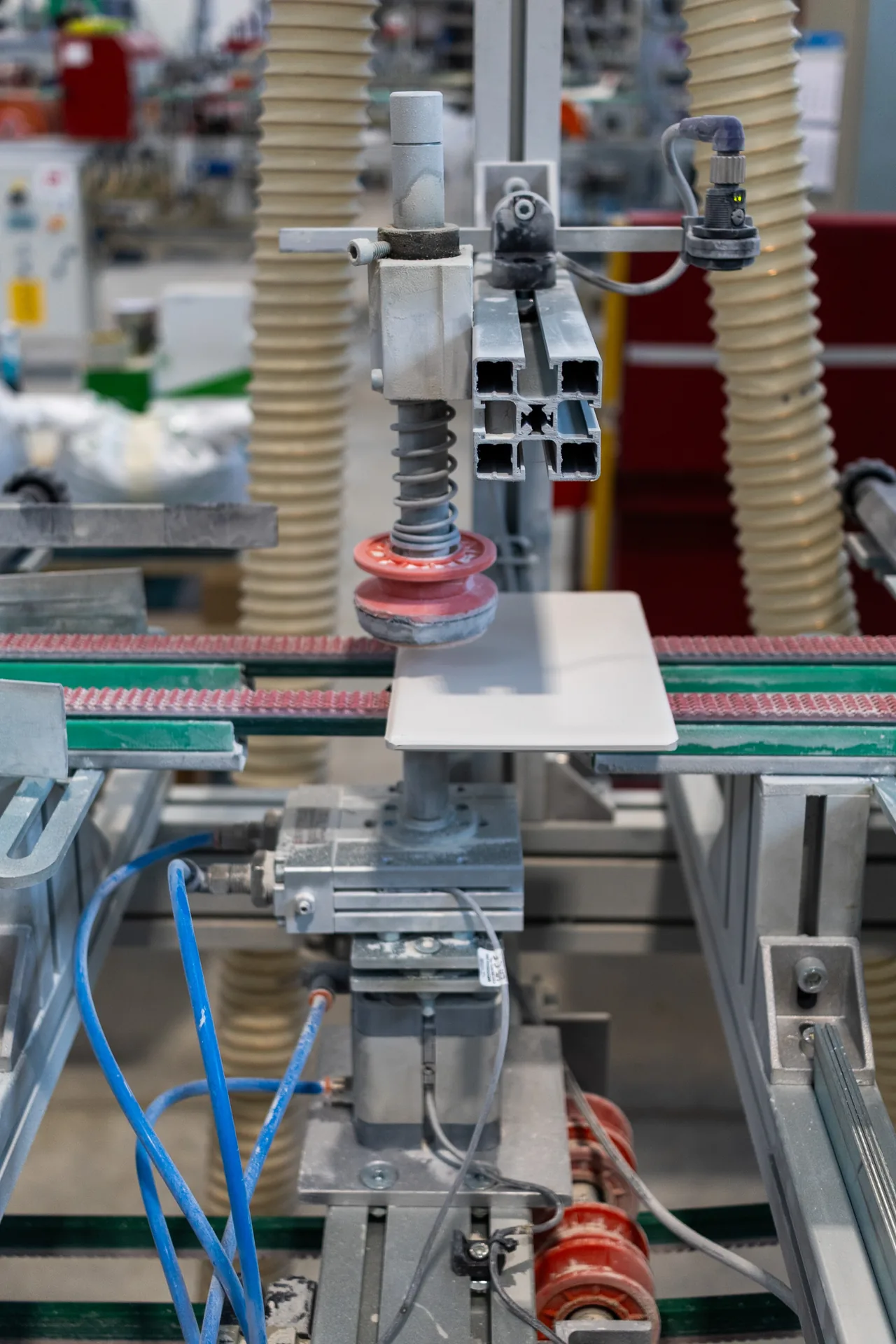
Dry pressing — De Marchi Verona
Stampaggio

Dry pressing

The porcelain blend, reduced to a very fine powder and slightly moistened, is compressed in the mould by a high-pressure hydraulic press. It is the technique used for flat, regular formats such as Square and Cadenza: it guarantees uniform density, sharp edges and precise dimensional tolerances.
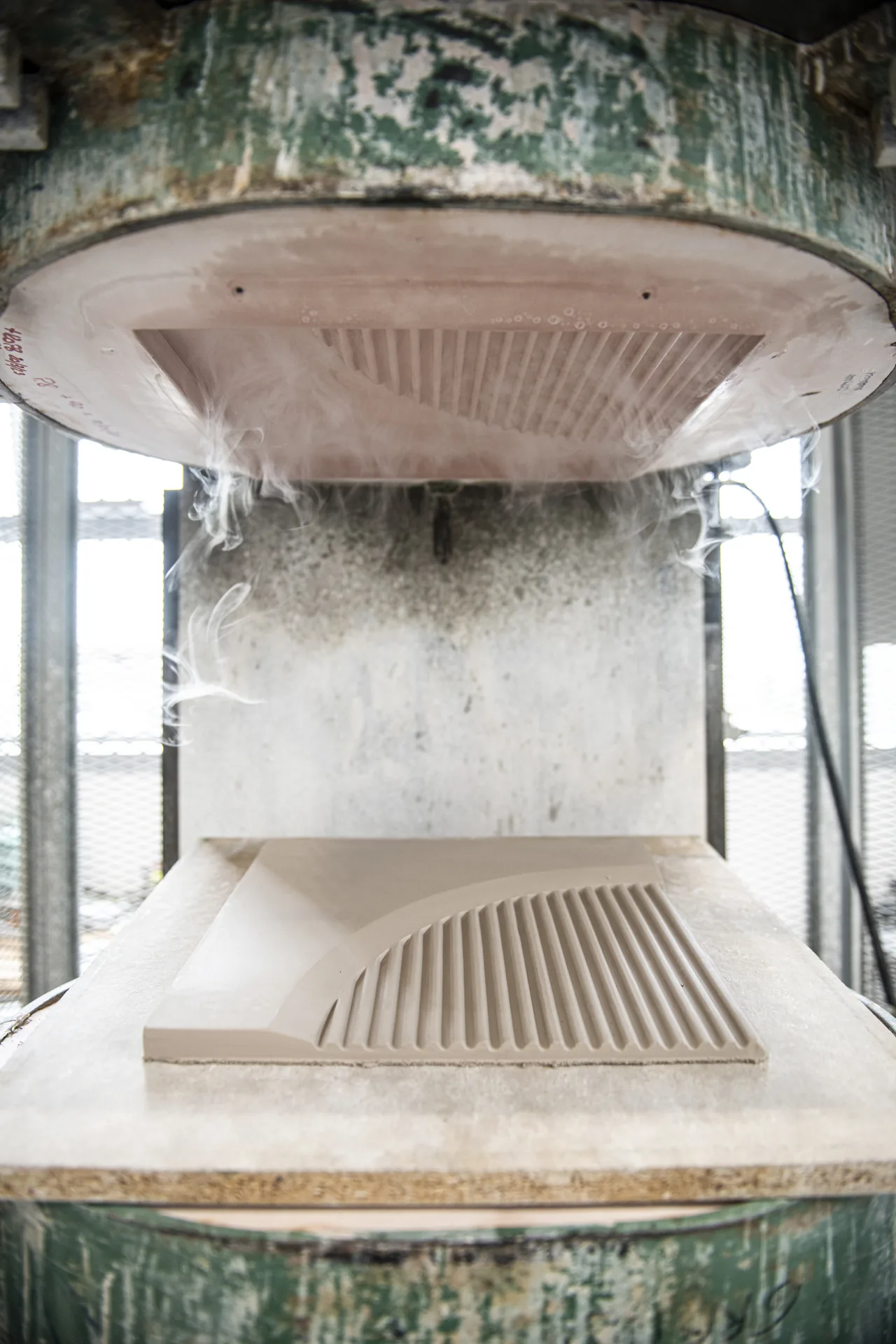
Wet pressing — De Marchi Verona
Stampaggio

Wet pressing

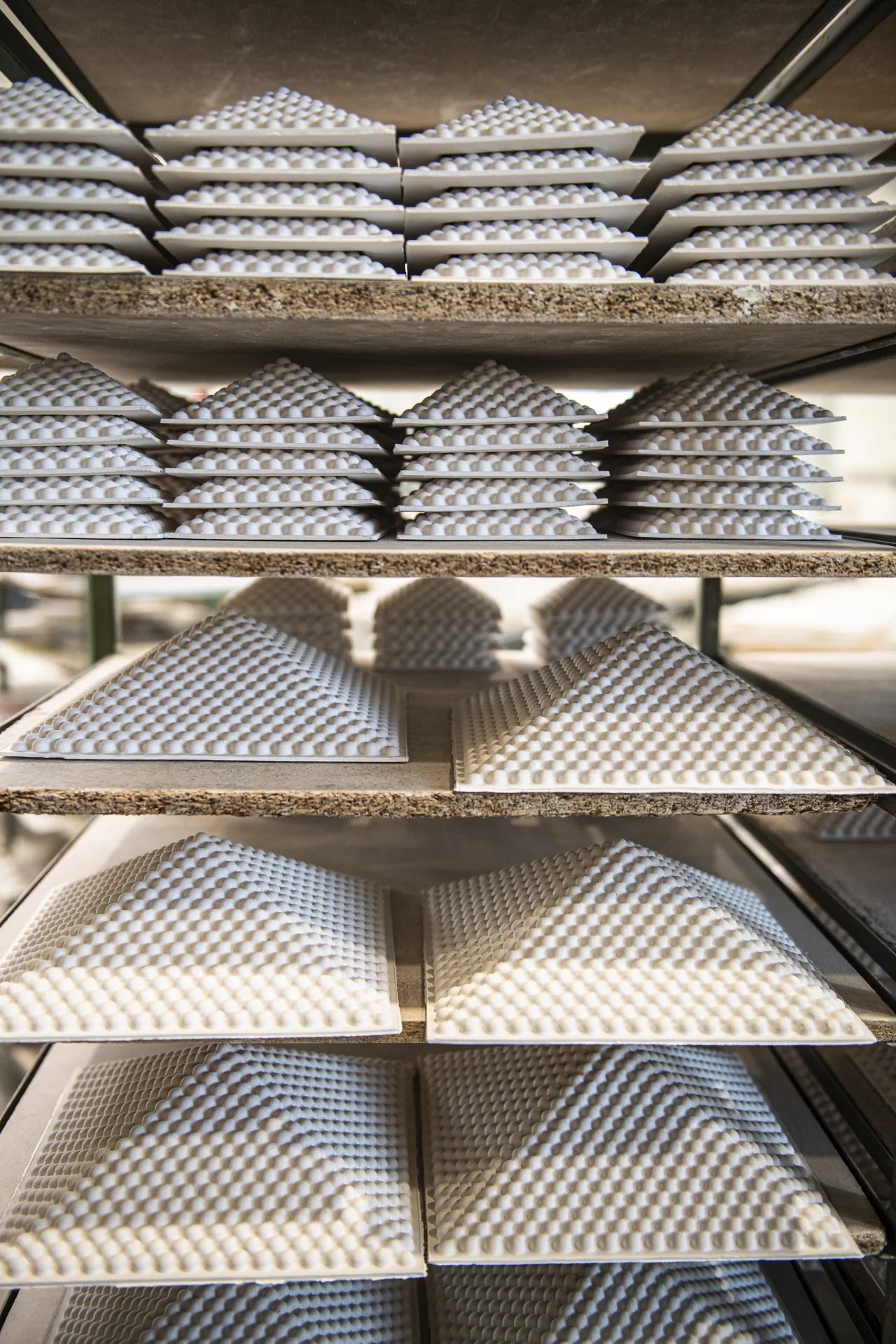
For three-dimensional elements and more complex reliefs, such as Arena, Calipso or Maya, the porcelain is worked while still plastic and moist. The press shapes the material to the mould geometry without cracking the details, restoring depth and sharpness to the reliefs.

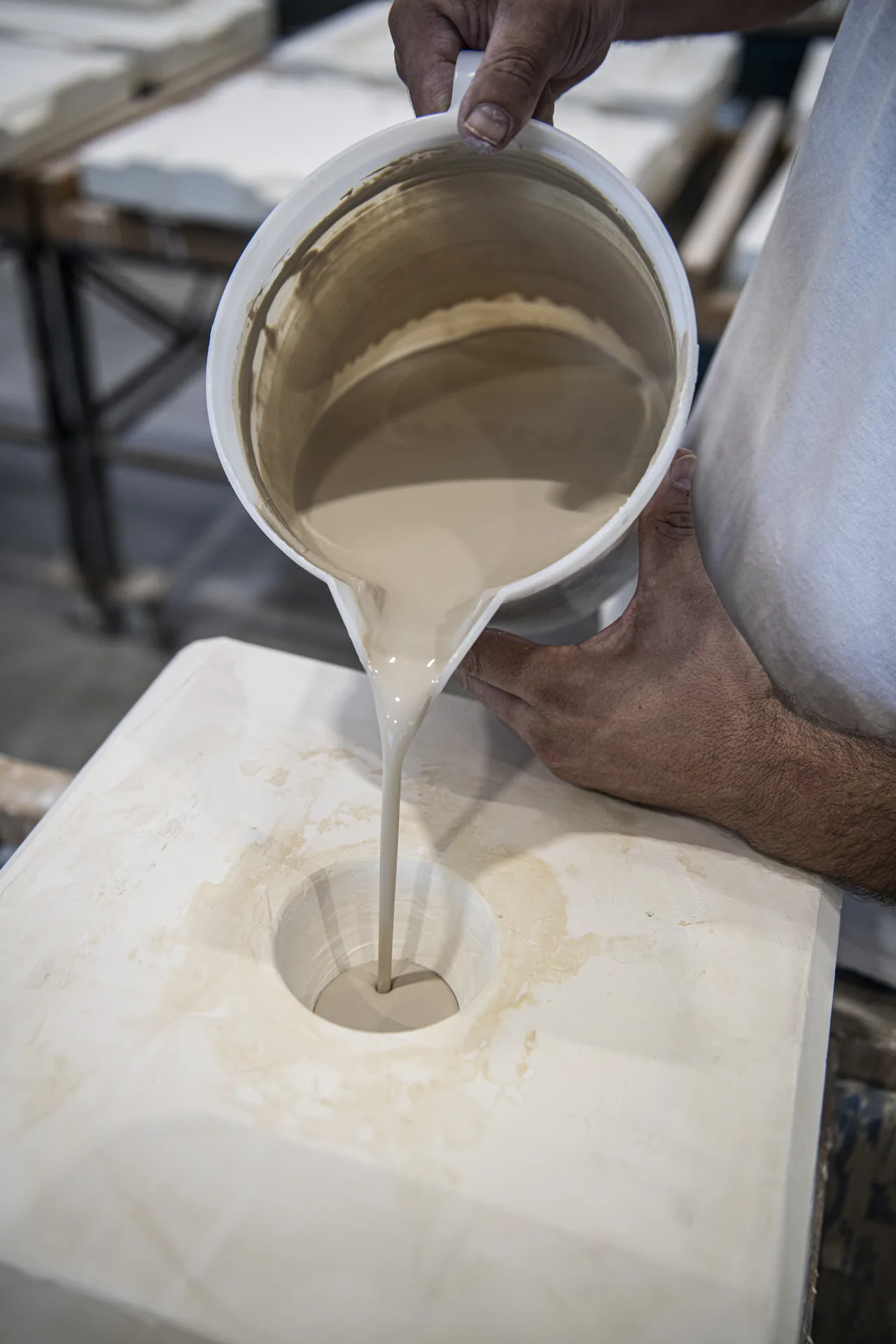
Casting — De Marchi Verona
Formatura

Casting

Slip, or liquid porcelain, is poured into plaster moulds that absorb the water. The material gradually settles on the mould walls and takes shape. It is the technique chosen for the more complex pieces such as Cross20, where volume and detail require a soft, accurate forming process.

Drying — De Marchi Verona
Essiccazione

Drying

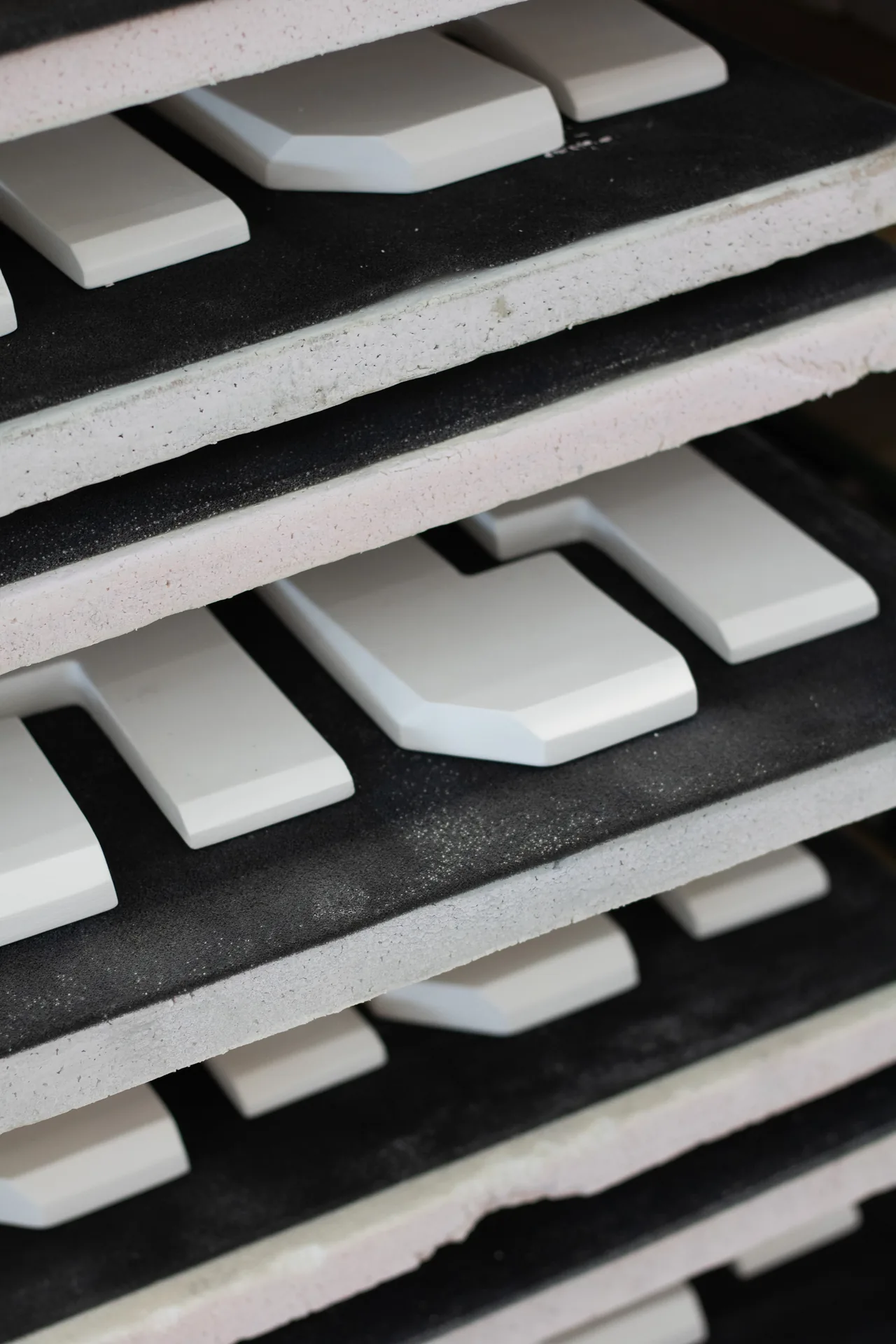
For 28 days, each piece rests naturally at room temperature. It is a slow, silent and indispensable stage in which time becomes part of the production process. Water gradually leaves the material, the structure stabilizes and the porcelain prepares for the heat of the first firing. There are no shortcuts: respecting the material's timing means preserving its balance, quality and uniqueness.

Sponging — De Marchi Verona
Raw finish

Sponging

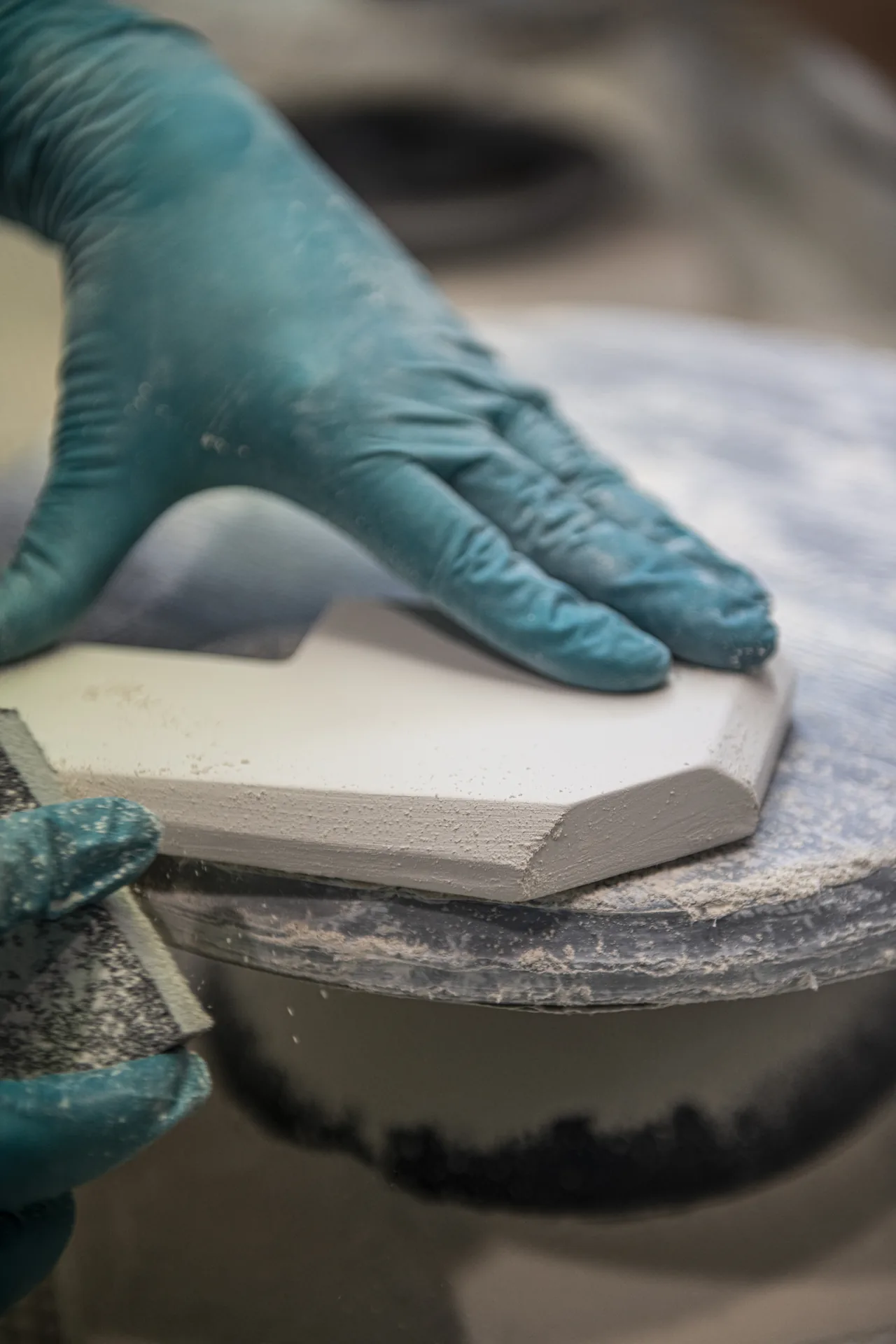
Once removed from the mould, the raw pieces are finished by hand: flashings are removed, edges are rounded and the surfaces are checked one by one. It is a fully manual step, essential for achieving the tactile quality that distinguishes De Marchi Verona porcelain.

Biscuit firing — De Marchi Verona
First firing

Biscuit firing

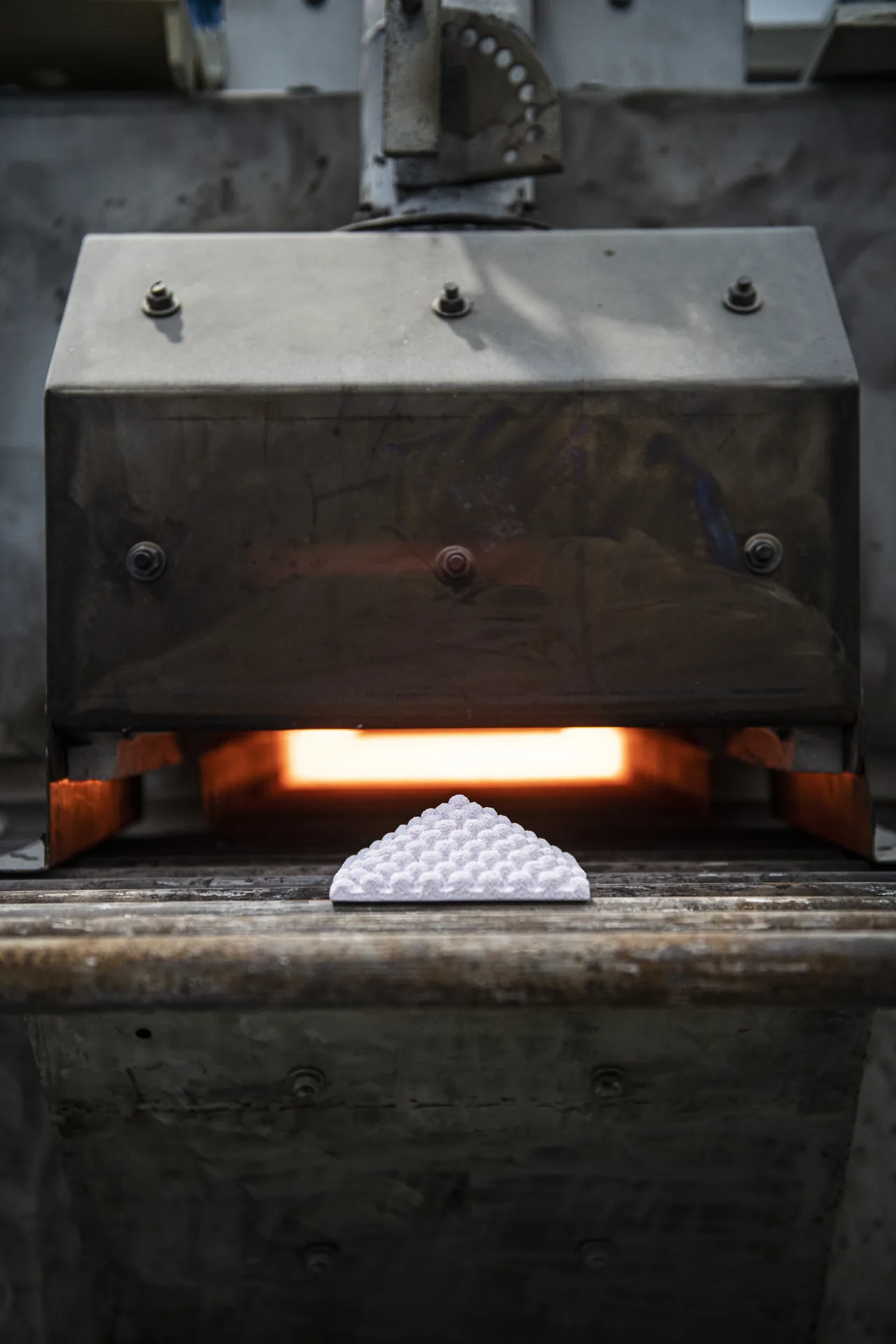
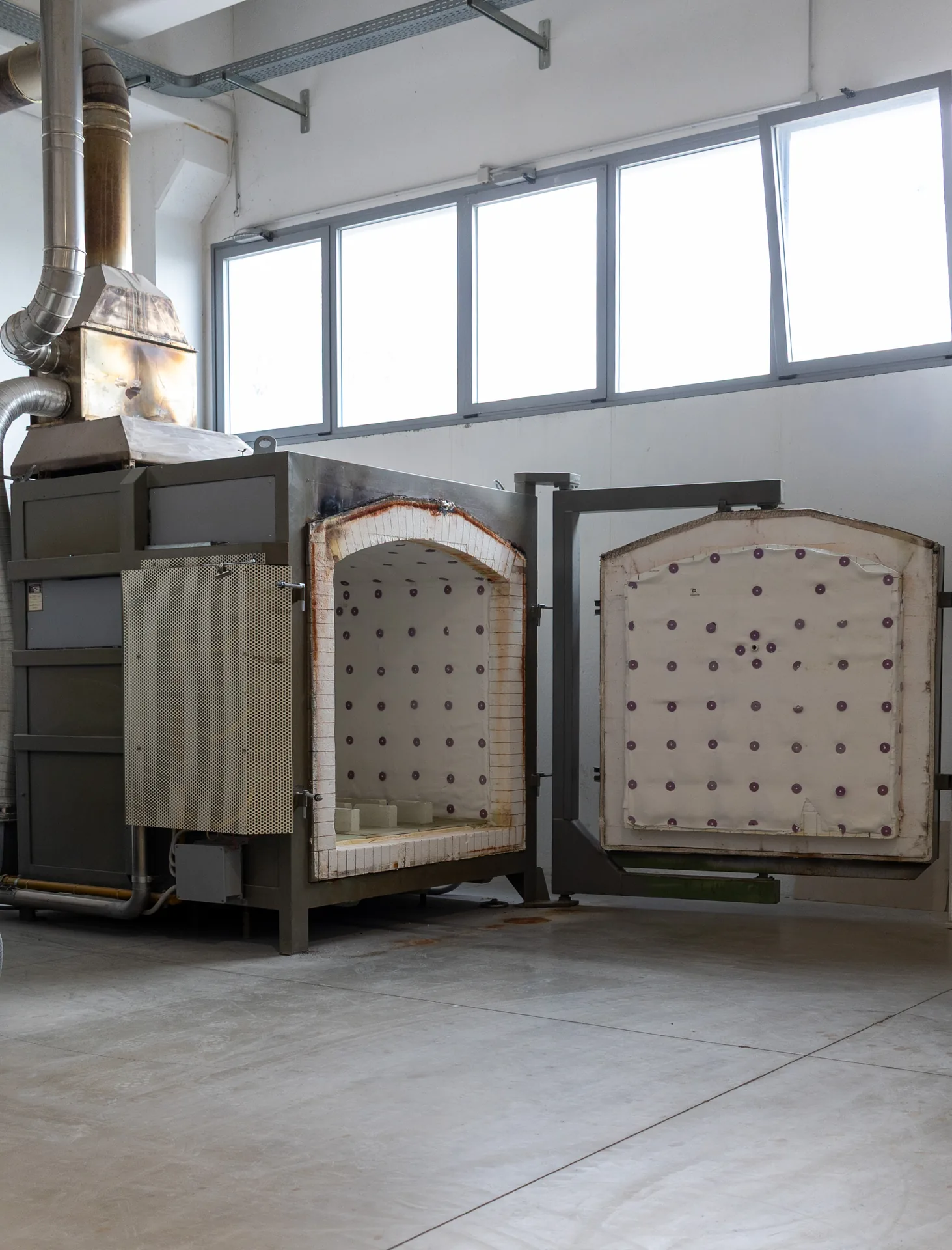
The pieces are loaded into the kiln for the first firing, at around 1,000 °C. The material loses its remaining water, stabilizes and becomes porous, ready to receive glaze. Biscuit firing is the moment when porcelain begins to become true ceramic, but it is not yet in its final state.

Glazing — De Marchi Verona
Decoration

Glazing

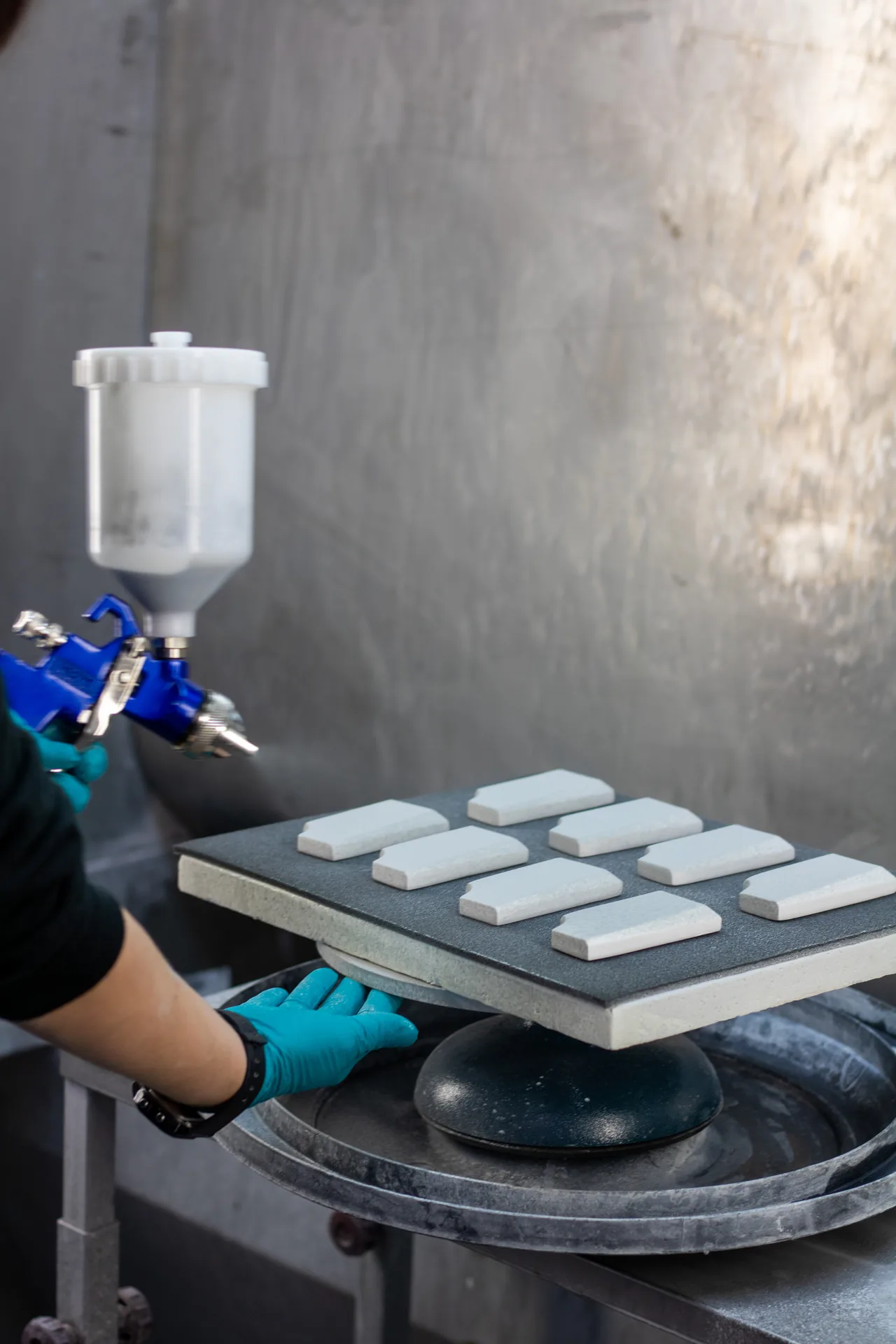
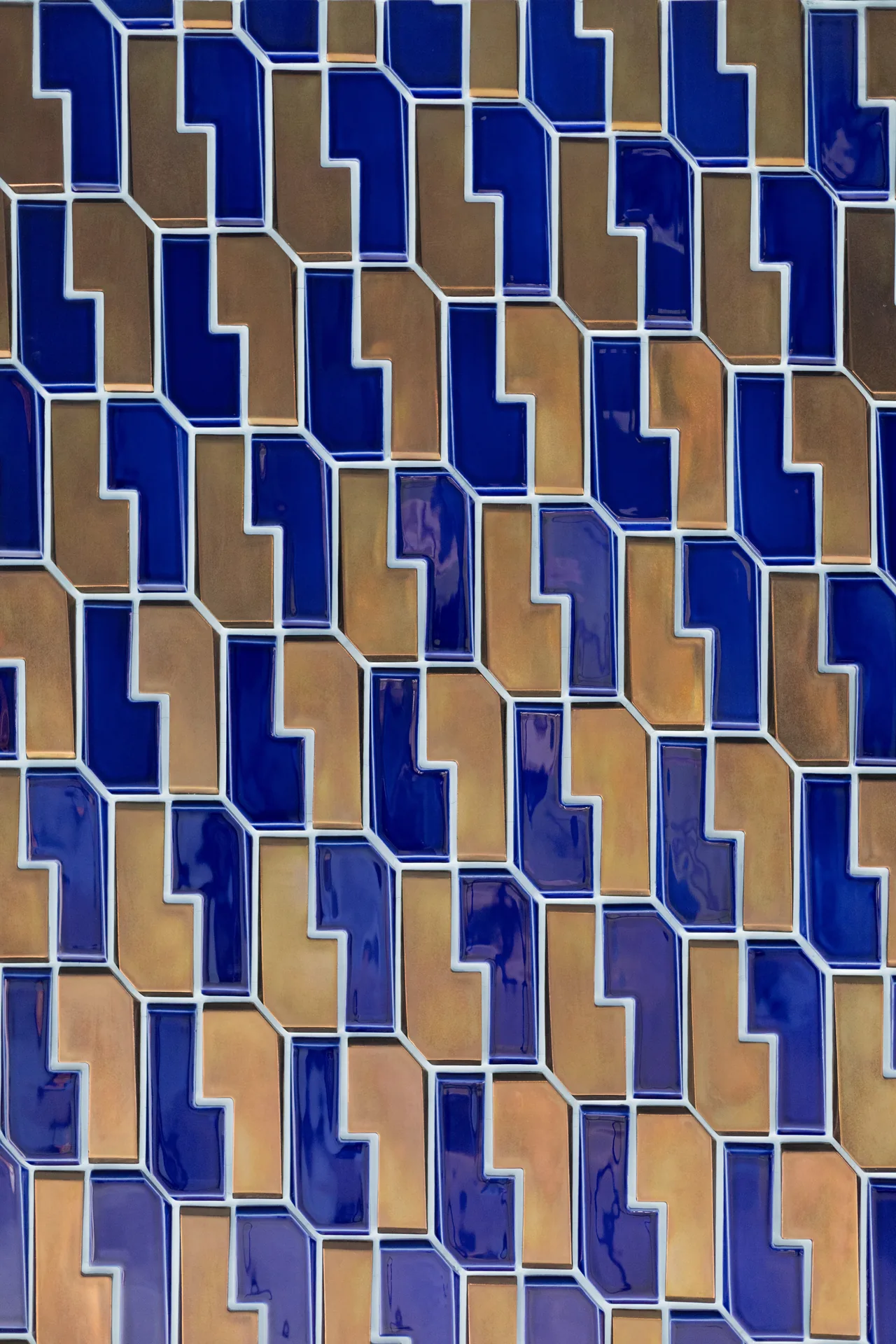
Glaze is applied by hand, piece by piece. For monochrome finishes we work by dipping and spraying; for special finishes and third-fire decoration we use a brush in successive layers. This is the stage in which each piece acquires its chromatic personality: colour is not a print, it is matter fused into the ceramic body.

Final firing — De Marchi Verona
Final firing

Firing

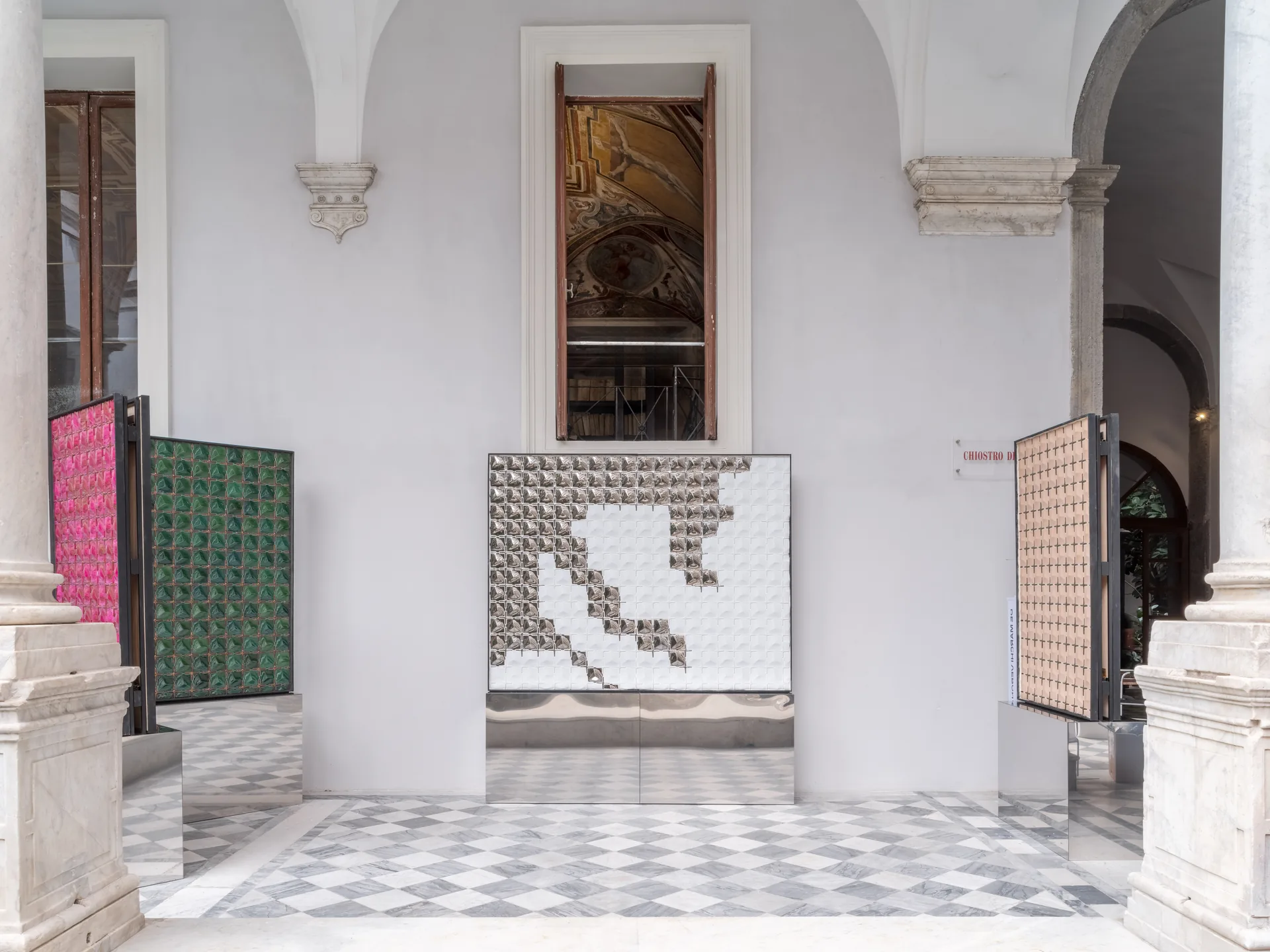
Above 1,200 °C. The porcelain vitrifies completely, reaching its final hardness and surface transparency. The glaze fuses with the body, becoming one material. Platinum and Gold Bronze finishes undergo an additional kiln pass at a lower temperature: the metallic layer is fixed with care.

Time, hand, fire:
the three ingredients that never compromise.

The process you see above is not automated. Technology serves the artisan; it does not replace them. Every piece that leaves the De Marchi Verona kiln bears the marks of case-by-case decisions: mould pressure, glaze thickness and firing time.

That is why every piece is unique. Nuances, micro-variations on the surface and controlled glaze accidents are not defects: they are the signature of hand-made work.

See the collections →

Maya — De Marchi Verona
Visit the manufacture

Want to see our work live?

We open the manufacture to architects, designers and industry professionals. A guided visit shows every stage of the process, from the kilns to the decoration lab.